The Strait of Hormuz is one of the most important maritime chokepoints in the world. Every day, massive oil tankers, liquefied natural gas (LNG) carriers, and container ships pass through the narrow waterway connecting the Persian Gulf to the Arabian Sea. For decades, the strait has been essential not only for Middle Eastern economies, but also for global energy markets and international trade.
According to the International Energy Agency (IEA), around 20 million barrels of oil moved through the strait daily in 2025, representing roughly one quarter of the world’s seaborne oil trade.
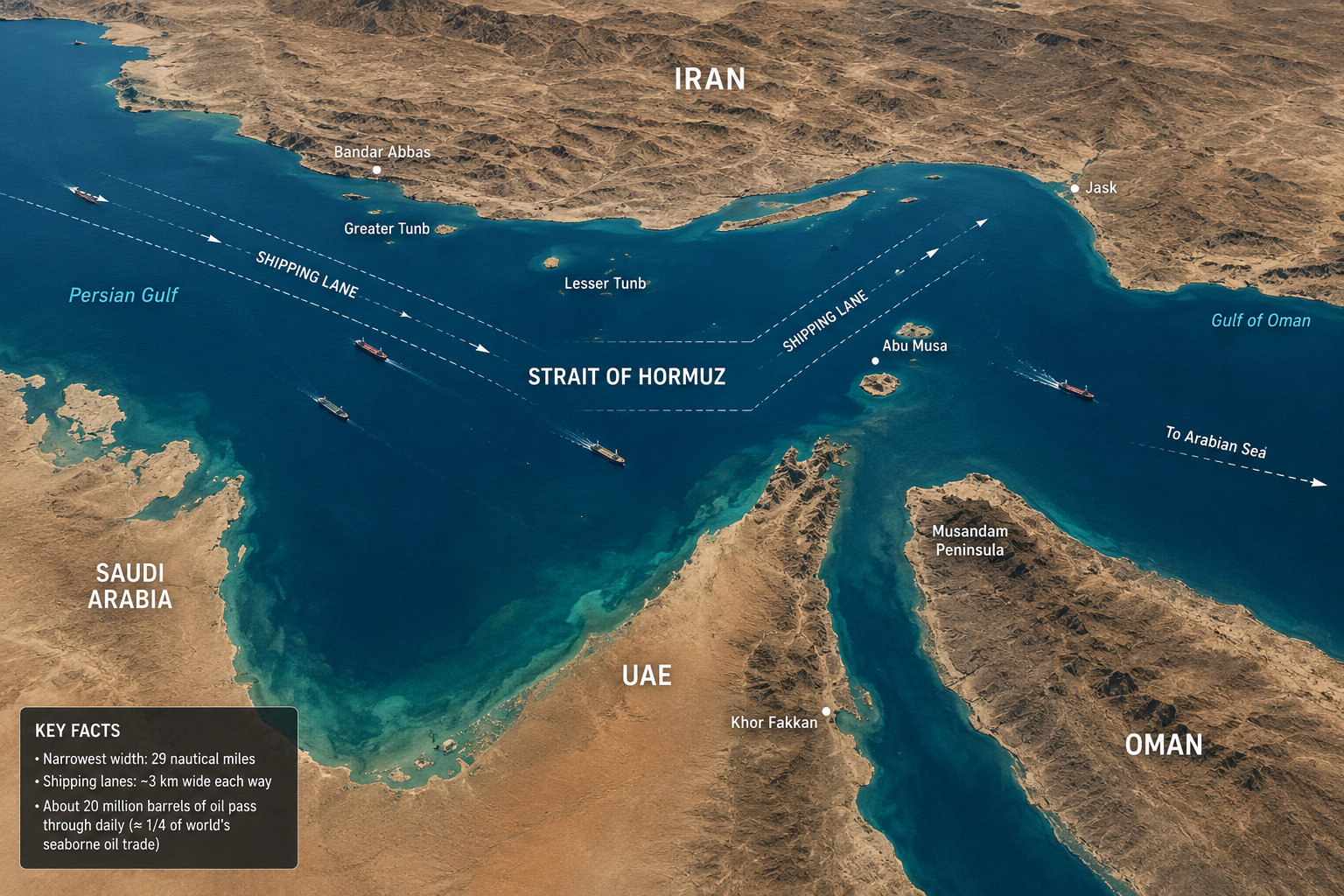
Why the Strait Matters: The strait is geographically narrow but economically enormous. At its narrowest point, it is only around 29 nautical miles wide, with designated shipping lanes just a few kilometers across.
Countries heavily dependent on the route include:
Saudi Arabia, Iraq, Kuwait, Qatar, United Arab Emirates, Iran.
Most Gulf oil exports must travel through Hormuz before reaching Asian, European, and global markets. Even temporary disruptions can trigger spikes in oil prices, insurance costs, and shipping rates worldwide. Recent tensions and military confrontations in the Gulf have once again highlighted how vulnerable global trade remains to instability in the region. Freight companies have reported delays, rising insurance premiums, and rerouting of vessels as concerns over maritime security increase.
Iran’s Strategic Position
Iran controls the northern side of the strait and has long viewed Hormuz as a strategic tool. Tehran has repeatedly warned that it could restrict or regulate shipping if its security or economic interests are threatened. Recent reports suggest Iran has expanded its definition of the Strait of Hormuz into a broader “operational zone,” stretching from the Iranian port city of Jask to areas near the UAE coastline.
Iran’s military planners increasingly see the waterway not only as a shipping lane, but as a strategic leverage point in regional politics. Analysts believe Tehran may not need to completely close the strait to influence markets; even limited restrictions or heightened inspections can disrupt global trade and raise energy prices.
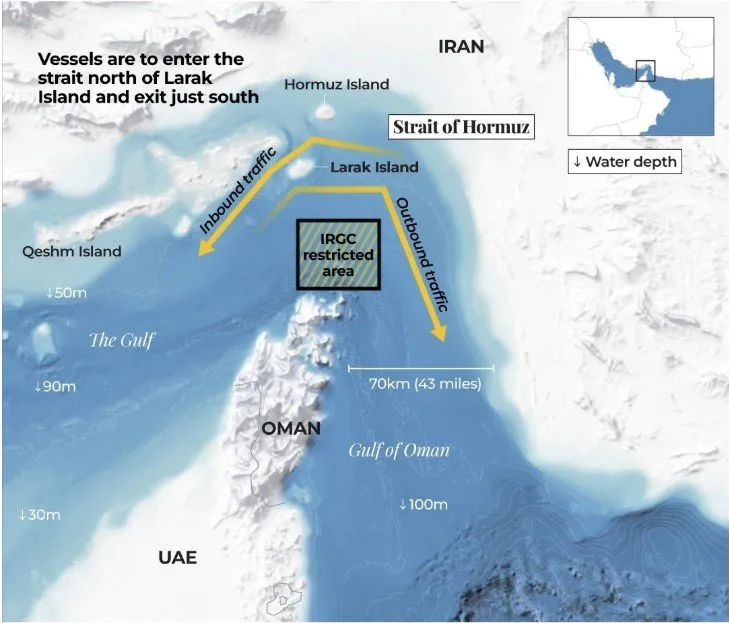
Iran’s Plan for New Shipping Routes: The Iranian government has promoted Jask as part of a broader effort to reduce dependence on the vulnerable strait and strengthen economic resilience during sanctions or conflict.
Reports indicate some of these routes move ships closer to the Iranian coastline or through controlled maritime lanes coordinated by Iranian naval forces. Iran has also invested heavily in developing the port of Jask on the Gulf of Oman. Unlike ports deeper inside the Persian Gulf, Jask provides direct access to the Arabian Sea without requiring ships to pass through the narrowest sections of Hormuz. Tehran hopes the port can eventually become a strategic export hub connected to inland oil pipelines.
In response to military tensions and the risk of naval mines or attacks, Iran has reportedly introduced alternative shipping corridors inside and around the Strait of Hormuz. These routes are designed to:
Reduce collision risks
Avoid suspected mine zones
Allow tighter Iranian monitoring of commercial vessels
Keep trade flowing during periods of crisis
Regional Alternatives to Hormuz
Iran is not the only country seeking alternatives. Several Gulf states are developing pipelines and overland export routes to bypass the strait entirely.
Examples include:
Saudi Arabia’s East-West Pipeline to the Red Sea
UAE pipelines connecting Abu Dhabi oil fields to Fujairah on the Gulf of Oman
Expanded trucking and rail logistics across the Arabian Peninsula
However, experts note that these alternatives still lack the capacity to fully replace Hormuz. Current bypass infrastructure handles only a fraction of the oil volumes that normally transit the strait daily.
Impact on Global Shipping
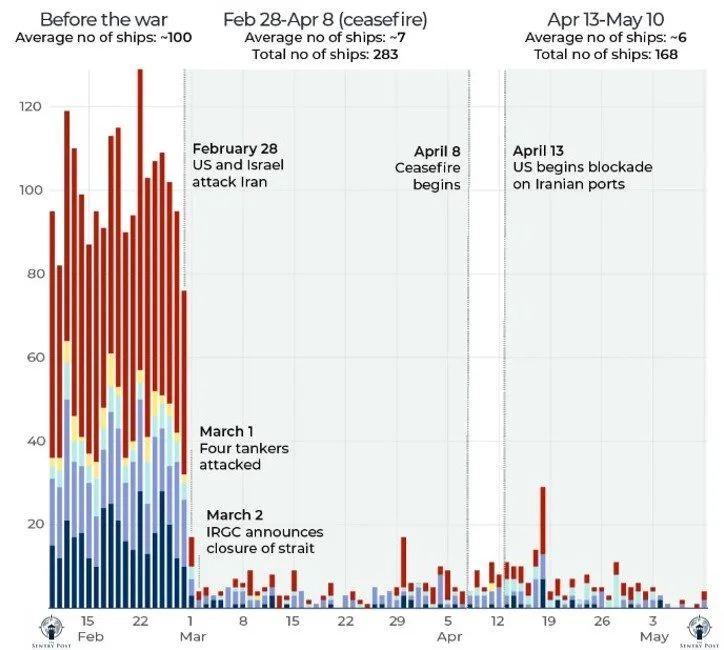
The uncertainty surrounding Hormuz has already changed shipping behaviour:
Tanker operators are rerouting vessels
Insurance premiums have surged
Container freight rates to Gulf ports have sharply increased
Some companies have shifted cargo movement to land transport routes through Saudi Arabia, Iraq, and Turkey.
Financial analysts warn that prolonged instability could raise costs for everything from fuel and plastics to food and consumer goods. For Asia, especially countries like China, India, Japan, and South Korea, uninterrupted Gulf shipping remains critically important because these economies depend heavily on Middle Eastern energy imports.
Conclusion
The Strait of Hormuz remains the world’s most important energy chokepoint. While Iran continues to use its strategic location as a source of geopolitical influence, it is also attempting to develop alternative maritime routes and infrastructure to secure its own exports and manage regional instability. At the same time, Gulf states and global powers are racing to diversify shipping and energy routes. Yet despite pipelines, new ports, and alternative corridors, no replacement currently matches Hormuz in scale or importance.
As regional tensions continue, the future of global shipping through the Gulf will remain closely tied to security, diplomacy, and the balance of power around one narrow stretch of water.