Over the past two decades, Iran has invested heavily in unmanned aerial vehicle (UAV) technology, transforming its drone program into one of the most extensive and influential in the Middle East. Iranian drones are now used for reconnaissance, surveillance, electronic warfare, precision strikes, and long-range attack missions. Their growing presence in regional conflicts and international security discussions has made them a major topic of military analysis worldwide.
Iran’s drone development has been driven by several factors: international sanctions limiting access to advanced aircraft, the need for low-cost asymmetric warfare tools, and the strategic goal of projecting power beyond its borders. As a result, Iran has created a diverse drone ecosystem ranging from small tactical UAVs to long-range loitering munitions capable of striking targets hundreds or even thousands of kilometers away.
Iran began experimenting with drones during the Iran–Iraq War in the 1980s. Early systems were relatively simple and primarily used for battlefield reconnaissance. Over time, improvements in electronics, navigation systems, and propulsion technology enabled the country to develop more sophisticated UAVs. By the 2000s and 2010s, Iranian drones evolved into operational combat platforms. Iran also invested in reverse engineering foreign technology, including captured Western and regional drones, this accelerated development allowed Iranian manufacturers to expand both the quantity and capability of their systems.
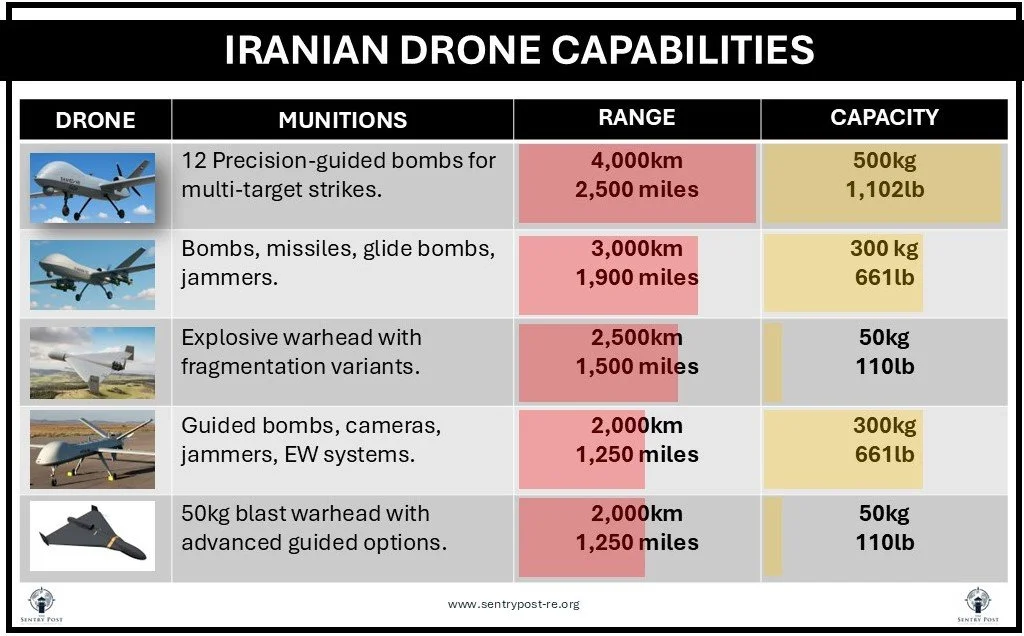
Asymmetric Warfare
Iranian military doctrine emphasizes asymmetric warfare, using unconventional tactics to challenge technologically superior opponents. Drones fit this strategy perfectly because they can: Threaten expensive military infrastructure, Operate without risking pilots, Strike from long distances, Create persistent surveillance coverage.
Iranian drones have reportedly been supplied to allied groups and partner forces in several regional conflicts. This has expanded Iran’s strategic influence and demonstrated the effectiveness of UAV-based warfare. Drone attacks often generate significant psychological pressure. Even relatively inexpensive drones can force adversaries to invest heavily in air defense systems, radar networks, and electronic warfare countermeasures.
Today, Iran produces multiple drone families designed for different military missions, including: Surveillance and intelligence gathering, Precision strike operations, Electronic warfare, Naval reconnaissance, Swarm attacks, Long-range strategic strikes.
Reconnaissance and Surveillance Drones
Reconnaissance UAVs are among the most widely used Iranian systems. These drones are designed to monitor battlefields, track troop movements, and gather intelligence. Examples include:
Mohajer series
Ababil series
Yasir UAV
These systems typically carry electro-optical cameras, infrared sensors, and communication relay equipment. They are relatively inexpensive and can remain airborne for extended periods. The Mohajer family, for instance, has evolved from a simple reconnaissance platform into armed variants capable of carrying guided munitions.
Combat and Strike Drones
Iran has developed several armed UAVs capable of launching missiles or guided bombs against ground targets. One of the best-known examples is the Shahed-129, a medium-altitude long-endurance drone often compared to the American MQ-1 Predator in terms of general mission profile. It can reportedly remain airborne for many hours and carry precision-guided weapons. Capabilities of Iranian strike drones include:
Long endurance flights
Precision-guided munitions
Remote battlefield surveillance
Simultaneous intelligence and attack roles
These drones are designed to provide Iran and allied groups with relatively low-cost airpower without risking pilots.
Loitering Munitions (“Suicide Drones”)
Perhaps the most internationally recognized Iranian drone capability involves loitering munitions, especially the Shahed-136. Unlike traditional UAVs that return to base after a mission, loitering munitions are designed to crash into their targets while carrying explosives. They combine aspects of missiles and drones. Key characteristics include:
Low production cost
Long operational range
Ability to overwhelm air defenses
GPS-guided navigation
Psychological and economic impact
These drones are often used in saturation attacks, where multiple units are launched simultaneously to exhaust defensive systems. One of Iran’s greatest advantages is affordability. Compared with advanced fighter aircraft or cruise missiles, drones are significantly cheaper to manufacture and deploy. This enables Iran and its allies to field large numbers of systems.
Limitations and Challenges
Despite their growing capabilities, Iranian drones also face important limitations.
Vulnerability to Air Defenses: Many Iranian drones fly relatively slowly and can be intercepted by modern air defense systems if detected early.
Electronic Warfare Risks: GPS jamming and communication disruption can reduce drone effectiveness.
Dependence on Imported Components:Although Iran manufactures much of its drone technology domestically, some systems reportedly rely on foreign electronic components that may be affected by sanctions or supply restrictions.
Accuracy Concerns: Some low-cost systems may lack the precision and reliability of more advanced Western UAVs.
Global Impact and Security Concerns
Iranian drones have influenced military thinking around the world. Their use in regional conflicts has demonstrated how relatively inexpensive UAVs can challenge advanced militaries and critical infrastructure. Military analysts now view drones not merely as support systems, but as central tools of modern warfare. Iran’s emphasis on scalable, affordable drone production has contributed to a broader global shift toward unmanned combat systems. Countries responding to this trend are investing in: Counter-drone technologies, Directed-energy weapons, Advanced radar systems, Electronic warfare capabilities, Drone interception systems.
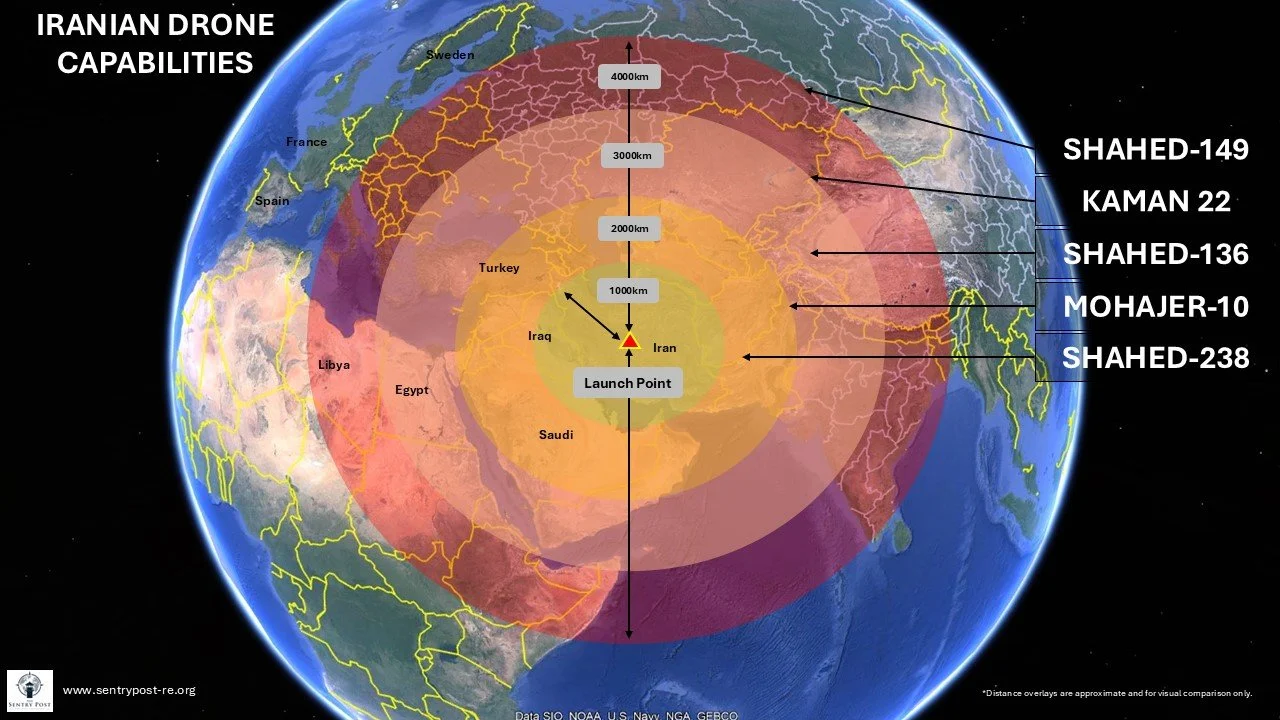
Iranian Drone Capabilities
Iran’s drone program has evolved from basic reconnaissance aircraft into a broad and increasingly sophisticated network of unmanned systems. Through affordability, adaptability, and asymmetric warfare strategies, Iranian drones have become a major element of regional military power. Their capabilities now include surveillance, precision strikes, long-range attacks, and swarm operations. While they still face technological and operational limitations, their growing influence has reshaped modern security discussions and demonstrated the expanding role of drones in 21st-century warfare. As UAV technology continues to evolve globally, Iranian drones will likely remain an important subject in military strategy, international diplomacy, and future conflict analysis.