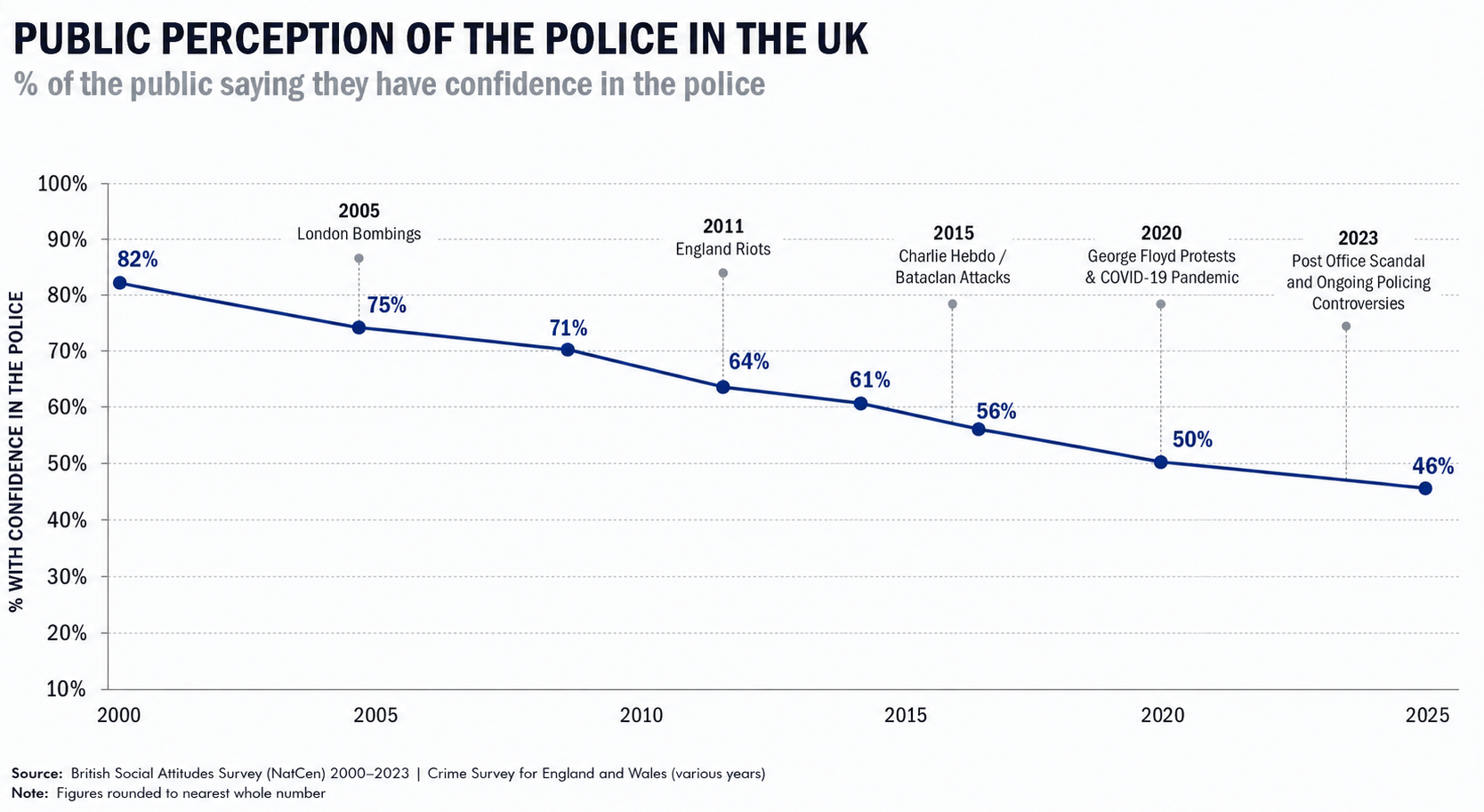
In recent years, the phrase “two-tier policing” has become one of the most controversial and emotionally charged terms in British politics and public debate. Critics argue that police forces across the United Kingdom apply laws unevenly depending on political affiliation, race, religion, class, or ideology. Others reject the phrase entirely, claiming it oversimplifies difficult policing decisions made under intense pressure and limited resources. Regardless of where one stands politically, there is a broader and more serious issue beneath the debate: a growing collapse in public confidence in policing. Trust in the police has been damaged by scandals, inconsistent enforcement of laws, failures to investigate crime effectively, and the perception that ordinary citizens are no longer treated equally before the law.
The question is no longer simply whether two-tier policing exists, but why so many people believe it does.
The term generally refers to the belief that police respond differently to similar situations depending on who is involved. Critics point to examples where protests, demonstrations, online speech, or public disorder appear to receive different treatment depending on political or social context. For example, some observers claim that right-wing demonstrations are policed more aggressively than left-wing protests, while others argue that police are overly cautious when dealing with certain communities out of fear of accusations of discrimination. During periods of unrest, the police have often been accused simultaneously of being too harsh and too weak.
This perception has intensified in the age of social media, where short video clips and selective reporting spread rapidly, often without context. Individual incidents can quickly become national controversies. Whether every accusation is fair is less important than the fact that millions of people increasingly believe the justice system operates inconsistently.
Declining Trust in British Policing
The United Kingdom once prided itself on the principle of “policing by consent,” the idea that police legitimacy depends on public trust rather than fear or force. That tradition has weakened significantly. Several high-profile scandals have damaged the reputation of police institutions:
Failures in investigating grooming gangs in several towns.
Misconduct and corruption within certain police units.
The murder of Sarah Everard by serving police officer Wayne Couzens.
Allegations of institutional racism, sexism, and misconduct within major police forces.
Low rates of solving burglary, theft, and violent crime.
Public frustration with the policing of online speech while street crime remains widespread.
Many citizens now feel the police focus more on political sensitivity and public relations than on basic law enforcement. At the same time, police officers themselves argue they are overstretched, underfunded, and expected to solve deep social problems that extend far beyond crime.
Claims That the Labour Government Has Weaponized Policing and Law
One of the strongest criticisms made by opponents of the current political establishment is that British policing and legal institutions are increasingly being used as political tools. Critics of the Labour Party argue that laws surrounding speech, protest, public order, and online behaviour are being enforced selectively against political dissenters while favoured ideological groups receive softer treatment. They claim the state has become more concerned with controlling opinion and maintaining political narratives than protecting equal justice. Supporters of this argument often point to:
Expanded monitoring of online speech.
Police visits over controversial social media posts.
Tougher public order restrictions on certain protests.
The recording of non-crime hate incidents.
Perceived disparities in how demonstrations are policed.
Increasing cooperation between government agencies, technology platforms, and law enforcement regarding misinformation and extremism.
To many critics, these developments represent the gradual politicisation of policing. However, defenders of the government reject the accusation that policing has been “weaponized.” They argue that modern laws are designed to reduce extremism, prevent violence, and protect vulnerable communities in an era shaped by terrorism, online radicalisation, and social unrest. The disagreement reflects a deeper divide in British society over the balance between security and liberty. For some citizens, stronger enforcement represents necessary protection against hatred and disorder. For others, it represents a dangerous expansion of state power into political expression and personal opinion. Regardless of which interpretation proves more accurate, the perception that the law is no longer politically neutral is profoundly damaging to democratic trust.
Politics and Media
Modern policing does not exist in a vacuum. Political pressure, media narratives, activist campaigns, and online outrage all influence decision-making. Police leaders today operate under intense scrutiny. Every arrest, public order decision, or operational mistake can become national news within minutes. This environment encourages risk-averse behaviour. Critics argue that police sometimes avoid strong action in sensitive cases because they fear accusations of racism, discrimination, or political bias. Others argue the opposite, that police overcompensate by targeting unpopular groups more harshly in order to demonstrate neutrality. The result is confusion and inconsistency. Public confidence erodes when people believe laws are enforced selectively or when different standards appear to apply to different groups.
Protest Policing and Public Perception
One of the biggest drivers of the two-tier policing debate has been the handling of protests. In recent years, Britain has seen:
Climate protests blocking roads and infrastructure.
Black Lives Matter demonstrations.
Anti-lockdown protests.
Pro-Palestinian and pro-Israel marches.
Anti-immigration demonstrations.
Farmer protests and strikes.
Each event has produced accusations of unequal treatment. Some critics argue that disruptive left-wing protests are tolerated for too long before arrests are made, while nationalist demonstrations are shut down quickly and aggressively. Others argue that police respond based on threat levels, crowd behaviour, intelligence assessments, and legal constraints rather than ideology. However, perception matters. When the public sees apparently different responses to similar acts, trust declines even if the operational reasoning is more complex.
Online Speech and the Expansion of Policing
Another controversial issue is the increasing involvement of police in online speech. The growth of hate speech laws, non-crime hate incident recording, and online monitoring has led many people to question whether police priorities are misplaced. Critics argue that officers spend too much time investigating offensive comments on social media while violent crime and theft remain unresolved. Stories of police visiting citizens over tweets or controversial opinions have strengthened concerns about freedom of expression. Supporters of such policies argue that online abuse can escalate into real-world harm and that preventing hate crimes is a legitimate police responsibility. Still, the balance between public safety and civil liberties remains one of the defining tensions in modern Britain.
The Failure to Solve Everyday Crime
Perhaps the greatest failure affecting public trust is not ideological policing but ordinary policing. Many victims of burglary, theft, vandalism, and assault report receiving little meaningful support from police. In some areas, crimes are closed quickly due to lack of evidence or limited resources. For ordinary people, the frustration is simple:
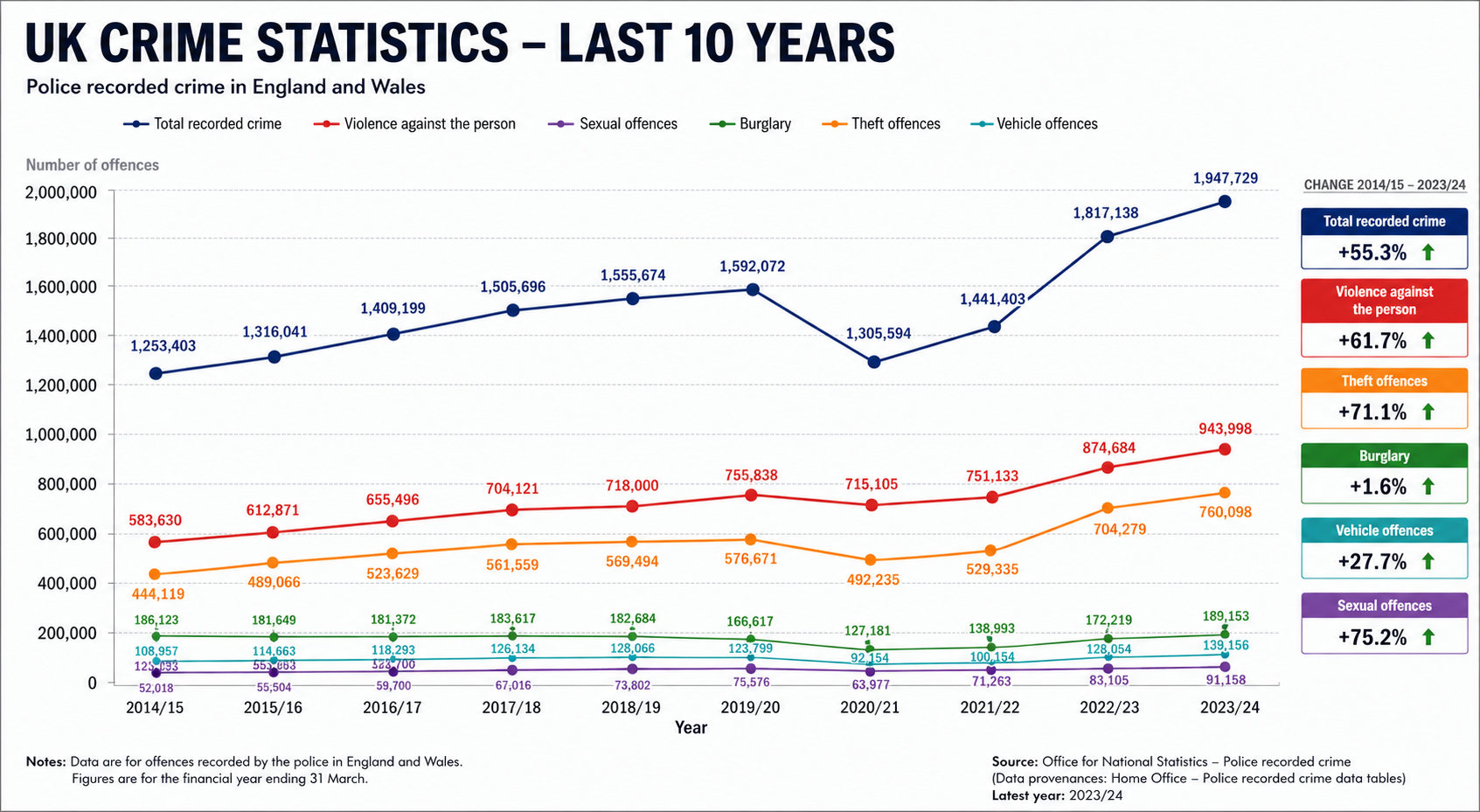
Phones are stolen and never recovered.
Burglaries go unsolved.
Shoplifting becomes common.
Anti-social behaviour increases.
Knife crime remains a major concern in cities.
When citizens feel abandoned over basic crime prevention, debates about fairness become even more intense. People begin asking why police appear highly active in political or social matters while everyday criminality seems increasingly tolerated. While criticism of policing has grown, many officers argue the public does not understand the pressures they face. Police forces across the UK have dealt with:
Budget constraints.
Staff shortages.
Rising mental health incidents.
Terror threats.
Cybercrime.
Increased paperwork and bureaucracy.
Public hostility toward officers.
Frontline officers often work long hours under difficult conditions while facing criticism from every direction. Many feel unsupported by political leaders and blamed for wider societal problems they cannot solve alone. The tension between public expectations and operational reality creates a dangerous cycle where both citizens and police lose faith in one another.
Rebuilding Trust
Restoring confidence in British policing will require more than slogans or public relations campaigns. Several reforms are frequently proposed:
Equal Enforcement of the Law: Police must demonstrate that laws apply equally regardless of political views, ethnicity, religion, or social status.
Greater Transparency: Clear explanations for policing decisions could reduce public suspicion and misinformation.
Focus on Core Crime: Many people want police to prioritise violent crime, theft, burglary, and public safety over symbolic or politically sensitive matters.
Internal Accountability: Misconduct and corruption within police forces must be addressed consistently and publicly.
Better Community Relations: Trust cannot exist without communication between police and the communities they serve.
The debate over two-tier policing reflects a deeper crisis within modern Britain: a collapse in institutional trust. Some claims about unequal policing may be exaggerated or politically motivated, others reflect genuine inconsistencies and failures that authorities have struggled to address.
What matters most is that a growing number of citizens no longer believe the justice system is fair, impartial, or effective. A democratic society depends on public confidence that laws are enforced equally and competently. When that confidence weakens, social division intensifies. The challenge facing British policing today is not only reducing crime but restoring legitimacy. Without trust, even effective policing becomes politically fragile.
The future of policing in the UK may ultimately depend on whether both the public and the police can rebuild the principle that once defined British law enforcement: fairness under the law for everyone.