Key Announcements and Political Impact
The 2026 King’s Speech delivered by King Charles III during the State Opening of Parliament has drawn major attention across the United Kingdom and beyond. The speech outlined the British government’s legislative priorities for the year ahead, focusing on economic reform, national security, immigration policy, healthcare modernization, and constitutional changes. Although delivered by the monarch, the King’s Speech is written by the government and serves as an official presentation of the ruling administration’s political agenda. This year’s parliamentary speech arrives during a period of political pressure for Prime Minister Keir Starmer, making the announcements especially significant for the future direction of the UK.
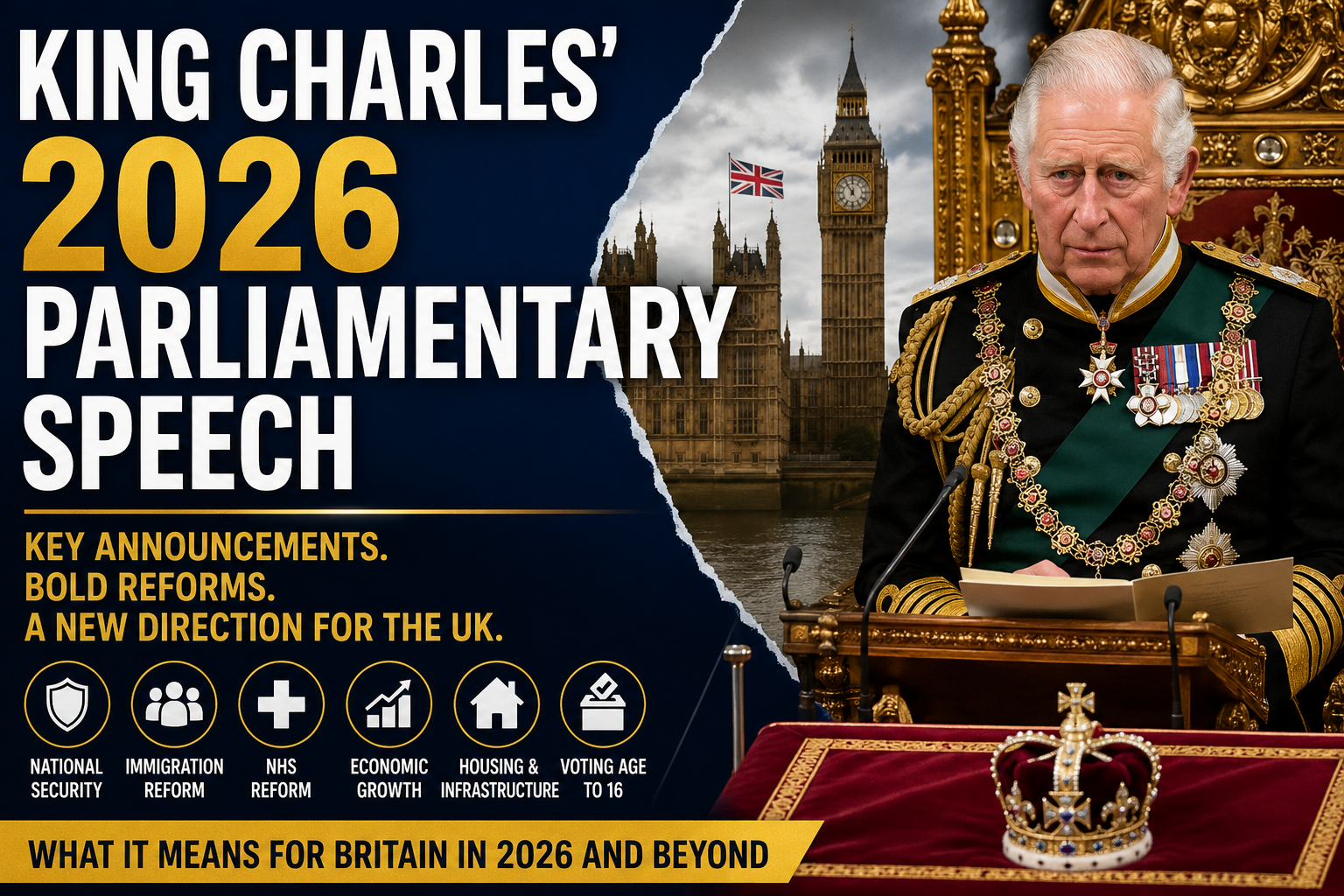
What Is the King’s Speech?
The King’s Speech is one of the most important constitutional traditions in the United Kingdom. It takes place during the State Opening of Parliament at the House of Lords and formally marks the beginning of a new parliamentary session. During the ceremony, King Charles III reads a speech prepared by the government that outlines proposed laws, reforms, and national priorities for the coming year. The event combines centuries-old royal tradition with modern political strategy, making it both a ceremonial and highly political occasion.
Key Points
1. National Security and Defence Expansion
One of the strongest themes in the 2026 parliamentary speech was national security. The government announced plans to introduce stronger laws targeting foreign interference, cyber threats, and hostile state activities. Officials also emphasized increasing defence readiness amid growing global instability and geopolitical tensions. The proposed legislation aims to strengthen the UK’s ability to respond to modern security threats while protecting critical infrastructure and energy systems.
Why It Matters:Security and defence policy are expected to play a major role in UK politics throughout 2026, especially as Europe faces continued geopolitical uncertainty.
2. Tougher Immigration and Asylum Policies
Immigration reform was another major focus of the speech. The government outlined plans to tighten asylum procedures, speed up deportation processes, and introduce stricter controls on illegal migration. Proposed reforms may also reduce appeal opportunities in some asylum cases. Supporters argue the measures are necessary to improve border control and reduce pressure on public services, while critics have raised concerns about human rights protections and international obligations.
Why It Matters:Immigration remains one of the most debated political issues in Britain and is likely to shape future elections and public opinion.
3. NHS Reform and Healthcare Modernization
Healthcare reform featured prominently in the government’s agenda for 2026.
Plans include:
reorganizing NHS administration,
improving digital healthcare systems,
expanding patient data integration,
and reducing long waiting times.
The government says modernization efforts will help improve efficiency and patient care across the National Health Service.
Why It Matters:The NHS continues to face pressure from staff shortages, funding concerns, and increased patient demand, making healthcare reform a top public priority.
4. Economic Growth and Trade Cooperation
Economic recovery and investment were central themes in the speech.
The government announced plans aimed at:
encouraging business growth,
reducing regulatory barriers,
attracting investment,
and strengthening trade cooperation with European partners.
Officials hope these reforms will stimulate economic growth, improve productivity, and support key industries such as technology, healthcare, and defence.
Why It Matters:Economic performance remains one of the biggest challenges facing the UK government as inflation, living costs, and growth concerns continue to affect households and businesses.
5. Housing and Infrastructure Development
Housing policy was also highlighted during the parliamentary speech.
The government pledged to:
expand affordable housing,
improve building safety standards,
reform property ownership systems,
and invest in major transport infrastructure projects.
Large-scale rail and regional development plans are expected to continue under the new legislative agenda.
Why It Matters:Housing affordability and infrastructure investment remain major concerns across the UK, particularly in growing urban areas.
6. Voting Age and Constitutional Reform
One of the most widely discussed proposals involves lowering the voting age to 16. The government also announced plans for constitutional reforms related to the House of Lords and parliamentary accountability. These proposals are expected to trigger significant political debate in the coming months.
Why It Matters:Changes to voting rights and constitutional structures could have a long-term impact on British democracy and future elections.
7. Introduction of a Digital ID System
The speech confirmed plans for a voluntary digital identification system that would allow citizens to access government services online more efficiently. Officials stressed that participation would remain optional after privacy concerns were raised by critics.
Why It Matters:Digital identity systems are becoming increasingly important worldwide, but they also raise questions about data privacy and government oversight.
Political Impact of the 2026 King’s Speech
Beyond the policy announcements, the 2026 King’s Speech carries major political significance. Prime Minister Keir Starmer faces growing pressure following disappointing local election results and criticism from within his own party. Analysts view the ambitious legislative agenda as an attempt to regain political momentum and demonstrate leadership during a difficult political period. The success or failure of these proposed reforms could significantly shape the future of the Labour government and British politics overall.
King Charles III’s 2026 parliamentary speech outlined one of the most ambitious government agendas in recent years. With proposals covering national security, healthcare, immigration, economic reform, and constitutional change, the speech signals a transformative year ahead for the United Kingdom. As Parliament begins debating these measures, political divisions and public reaction will likely intensify, making 2026 a critical year for the future direction of British politics.