British politics has a long history of political ruthlessness: Prime ministers are often brought down not by the opposition, but by panic within their own party. From Margaret Thatcher to Boris Johnson and Liz Truss, history shows that when MPs begin to fear for their own political survival, loyalty can disappear remarkably quickly. Following disappointing local election results, speculation has intensified around whether Prime Minister Keir Starmer could eventually face pressure from within the Labour Party itself. At present, there is no organised leadership challenge. However, poor electoral performances often accelerate internal tensions that already exist beneath the surface.
Why MPs Could Become Nervous: Local elections are rarely decisive on their own, but they are politically symbolic. They provide an early measure of public sentiment and often reveal whether a governing party is maintaining or losing momentum. If Labour were to suffer major council losses, particularly to Reform UK, the Greens, or independent candidates, many Labour MPs could begin worrying about their own seats at the next general election. For MPs, politics is ultimately survival. Once MPs believe a leader has become an electoral liability, internal discipline can weaken rapidly.
Recent polling has already alarmed parts of Westminster. Surveys have shown Labour’s support falling sharply from its general election position, while Reform UK has surged in several national polls. At the same time, Keir Starmer’s personal approval ratings have deteriorated significantly. While governments often experience mid-term declines, the speed of Labour’s polling drop has fuelled anxiety inside the party.
The Problem Facing Starmer: Starmer’s greatest political strength was once his image of competence and stability. Yet critics increasingly argue that competence without inspiration is proving insufficient during a period of economic frustration and political volatility. Many voters still associate Labour with managerial caution rather than transformative change. On the left, some activists believe the party abandoned too many progressive policies in pursuit of centrist credibility. Meanwhile, in working-class constituencies, Labour faces growing competition from Reform UK on issues such as immigration, national identity, and economic dissatisfaction. This leaves Labour squeezed from multiple directions simultaneously. For MPs in marginal constituencies, that trend is deeply concerning.
Could Labour Actually Remove Him? Technically, yes. Under Labour Party rules, MPs can trigger a leadership contest if enough internal pressure builds. In practice, however, removing a sitting prime minister is politically dangerous and deeply destabilising. Labour MPs would only seriously consider such a move under several conditions such as: catastrophic local election losses, continued collapse in national polling, growing donor and activist unrest, or a widespread belief that Starmer could lose the next general election. At the moment, Labour has not reached that stage. But British political history suggests leadership questions can move from “unthinkable” to “inevitable” with surprising speed.
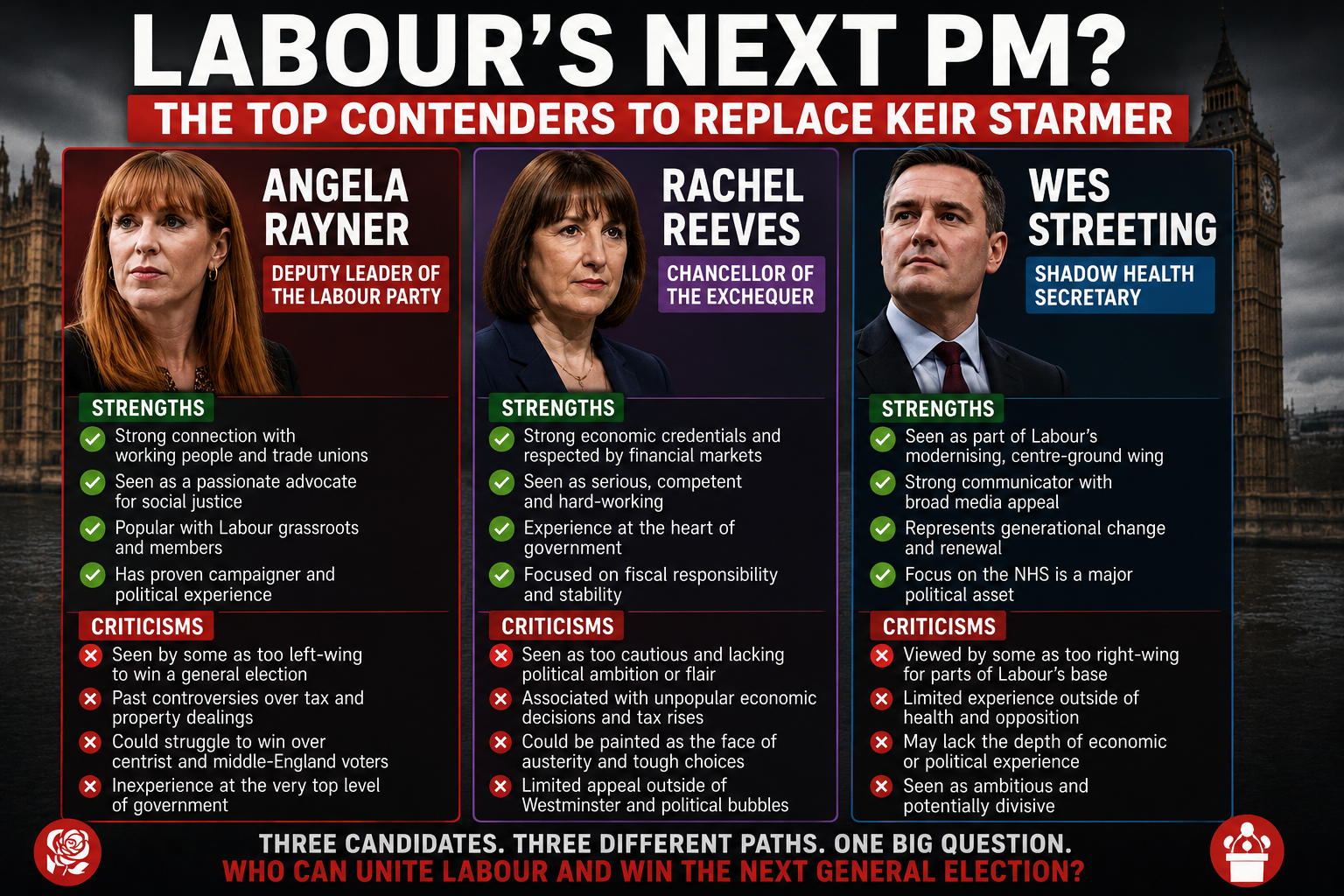
Who Could Replace Him?
If pressure on Starmer intensified, attention would quickly turn toward possible successors. Names frequently discussed in Westminster include Angela Rayner, Rachel Reeves, and Wes Streeting.
Each represents a different ideological and strategic direction for Labour. However, none currently commands overwhelming support across the parliamentary party. That uncertainty itself may help protect Starmer for now.
Conclusion
Keir Starmer is not currently on the verge of removal. But disappointing local election results could deepen an already growing sense of vulnerability around his leadership. In modern British politics, authority is often temporary and conditional. Prime ministers survive for as long as their MPs believe they can win.
The moment that belief disappears, political survival becomes extraordinarily difficult, regardless of how secure a leader once appeared.